How Calorie Density Can Transform Your Weight Management Strategy
See why choosing low-calorie-dense foods can make healthy eating easier, plus get a practical list of foods ranked by their calorie density.
Have you ever wondered if you could eat more food and still reach your weight goals? The answer lies in understanding calorie density—a simple but powerful concept that can make healthy eating feel effortless and satisfying.
What Is Calorie Density?
Calorie density refers to the number of calories in a specific weight or volume of food. Foods with low calorie density (like fruits, vegetables, and broth-based soups) contain fewer calories per bite, allowing you to enjoy larger portions. In contrast, high calorie density foods (such as oils, nuts, cheese, and sweets) pack a lot of calories into small servings.
Why Calorie Density Matters
When you focus on low-calorie-dense foods, you can fill your plate (and your stomach) without consuming too many calories. This approach helps you feel full and satisfied, making it easier to stick to your nutrition goals without feeling deprived.
How to Use Calorie Density for Weight Management
Fill Up on Low-Calorie-Dense Foods: Make half your plate non-starchy vegetables or fruits. These foods add volume and fiber, keeping you full for longer.
Limit High-Calorie-Dense Foods: Use calorie-rich foods like oils and nuts sparingly. They’re easy to overeat.
Mix and Match: Pair low-calorie-dense foods with small amounts of higher-calorie-dense items for flavor and satisfaction.
Cook Smart: Opt for steaming, grilling, or baking instead of frying to keep calorie counts in check.
Start with Soup or Salad: Beginning your meal with a veggie-based soup or salad can help curb hunger and reduce overall calorie intake.
Visualizing Calorie Density
Imagine your stomach filled with 400 calories of different foods:
A large bowl of salad or fruit fills your stomach, thanks to water and fiber.
The same calories from cheese or oil barely cover the bottom of your plate.
This simple visual shows why low-calorie-dense foods help you feel full on fewer calories.
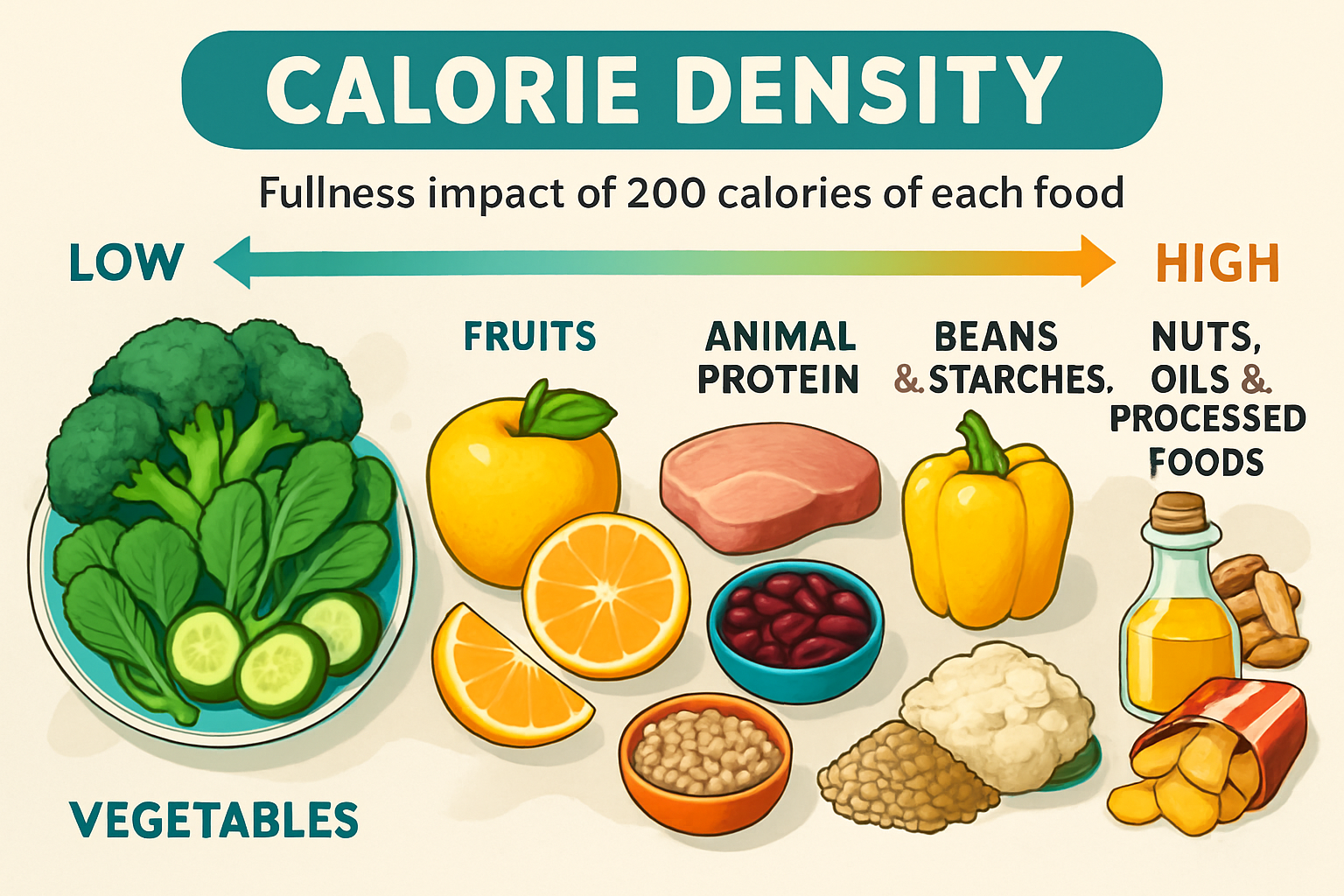
This image compares how low- and high-calorie-dense foods fill the stomach with the same number of calories.
Calorie Density: Foods Ranked
Here’s a quick look at foods by calorie density—from lowest to highest:
A list showing common foods ranked from lowest to highest calorie density.
Practical Tips
Add a side of veggies or fruit to every meal.
Use smaller amounts of high-calorie toppings for flavor.
Read nutrition labels to compare calorie content per serving.
Try new recipes that highlight low-calorie-dense ingredients.
Final Thoughts
Focusing on calorie density empowers you to eat satisfying meals while managing your calorie intake. It’s a flexible, enjoyable approach that supports long-term wellness and makes healthy eating feel less like a diet and more like a lifestyle.
Want more practical nutrition tips?
Subscribe to my newsletter or follow along for wellness strategies, plant-based tips, and science-backed advice!
Have questions? Schedule a free consultation or send me an email!
Dr. Heather Gosnell
Pediatrician | Plant-Based Health Coach | Advocate for Holistic Family Wellness
Seed Oils: What’s the Real Story?
Are seed oils healthy? Get a simple breakdown of what the science really says and how to use them wisely in your everyday meals.
Seed oils— like canola, sunflower, soybean, safflower, and corn oil—have become a staple in kitchens and processed foods worldwide. Yet, recent social media buzz has painted them as toxic villains linked to inflammation, chronic disease, and obesity. However, leading nutrition experts and decades of scientific studies tell a more nuanced story. This blog will cut through the misinformation to reveal what the latest research actually says about seed oils and their role in a healthy diet.
What Are Seed Oils?
Seed oils are extracted from the seeds of various plants. They’re rich in unsaturated fats, particularly omega-6 fatty acids, and are typically liquid at room temperature. Unlike saturated fats found in butter, lard, or coconut oil, seed oils are widely used for their neutral flavor, affordability, and versatility in cooking and food manufacturing.
Omega-3 and Omega-6: The Essential Fats
Both omega-3 and omega-6 fatty acids are essential for our health—our bodies can’t make them, so we need to get them from our diets. Omega-3s, found in fatty fish, flaxseeds, and walnuts, are known for their anti-inflammatory properties and benefits for heart and brain health. Omega-6s, which are abundant in seed oils, also play important roles in cell function, energy production, and heart health.
Despite what you may have heard, omega-6 fatty acids are not inherently harmful or pro-inflammatory. In fact, recent research shows that the idea that omega-6s cause inflammation is not supported by science. Omega-3s may have stronger anti-inflammatory effects, but this doesn’t mean omega-6s are harmful. Both types of fat are necessary for optimal health, and the key is balance.
The Inflammation Myth
A common claim is that seed oils promote inflammation and oxidative stress, increasing the risk of chronic diseases. However, randomized controlled trials and large-scale studies consistently show that linoleic acid—the main omega-6 fat in seed oils—does not increase inflammation or oxidative stress in humans. In fact, higher intake of linoleic acid is linked to a reduced risk of cardiovascular disease and may even help lower the risk of type 2 diabetes, liver disease, and dementia.
Seed Oils and Cholesterol
One of the best-studied benefits of seed oils is their effect on cholesterol. Decades of research show that swapping saturated fats for unsaturated fats—like those in seed oils—lowers LDL (“bad”) cholesterol, a major risk factor for heart disease. Few nutrition recommendations have as much solid evidence behind them, and large studies consistently link this switch to lower death rates from heart disease.
The Role of Processed Foods
It’s true that the rise in seed oil consumption has paralleled increases in obesity and chronic disease. However, this correlation is likely due to the overall diet—especially the high intake of ultra-processed foods that are packed with added sugar, salt, and unhealthy fats, not just seed oils. The real health risks come from these processed foods, not the oils themselves. In fact, replacing animal fats with seed oils has been one of the key contributors to the decline in cardiovascular mortality in recent decades.
The Bottom Line
Seed oils are not the villains they’re sometimes made out to be. When used in moderation as part of a balanced, whole-food diet, they can be a healthier choice when they replace saturated fats. The scientific consensus, supported by global health authorities, is that seed oils are safe and beneficial for most people.
Key Takeaways:
- Seed oils are rich in unsaturated fats, especially omega-6 fatty acids.
- Omega-6s are not pro-inflammatory and are essential for health.
- Replacing saturated fats with seed oils lowers LDL cholesterol and reduces heart disease risk.
- The real health risks come from ultra-processed foods, not seed oils themselves.
- Seed oils can be part of a healthy diet when used in moderation.
So, the next time you reach for a cooking oil, remember: choosing a seed oil—rather than a tropical oil high in saturated fat like coconut or palm oil, or an animal fat like butter or lard—is a smart choice for your heart and your health, since seed oils are higher in healthy unsaturated fats and have been shown to support cardiovascular wellness.
Have questions? Schedule a free consultation or send me an email!
Dr. Heather Gosnell
Pediatrician | Plant-Based Health Coach | Advocate for Holistic Family Wellness
Follow me on Instagram/Facebook for more tips!
Why I Went Plant-Based: My Journey to Better Health and Wellness
Discover the personal journey and science-backed reasons that inspired me, as a pediatrician and plant-based health coach, to embrace a plant-based lifestyle—and how it’s transformed my approach to health and wellness.
In 2017, my life, and my family’s, changed course after I discovered the work of Dr. Michael Greger. I first stumbled upon his website, NutritionFacts.org, and quickly signed up for the newsletter. Soon after, I read his book How Not To Die and was hooked.
A Physician’s Wake-Up Call
As a physician, I assumed my medical training had taught me everything about the healthiest diet and lifestyle. But as I dove into the research on NutritionFacts.org, I realized how wrong I was. Medical school had focused on treating diseases after they started-not on preventing them in the first place.
What shocked me most was learning that only about 25% of our health and longevity is determined by genetics; the remaining 75% comes down to how we live. With the right lifestyle, we can prevent heart disease, diabetes, many cancers, dementia, and other chronic conditions. This hit home for me, as I have a genetic mutation that increases my risk for heart disease, high blood pressure, and early-onset dementia.
Taking the First Steps
After just a few hours on NutritionFacts.org, I knew I had to make a change for myself and my family. The first thing we did was stop buying meat. At the time, our freezer was full of meat and fish from Costco. I thought we’d slowly use it up, but after a few months, my husband and I didn’t even want to finish it-we ended up throwing it out.
Next, I learned how to adapt our favorite dishes. I swapped out meat for soy-based protein in meals like spaghetti and tacos, and sometimes we tried mock meats. I also had to rethink my work lunches-my old standby was cottage cheese with fruit. I switched to oatmeal with fruit, which I still enjoy today, thanks to convenient steel-cut oat packets.
Saying Goodbye to Dairy
The last holdout was cheese, which was the hardest for me to give up. Cheese contains casein, a protein that breaks down into casomorphins-compounds that bind to opioid receptors in the brain and trigger dopamine release. No wonder cheese is so crave-worthy! But over time, we phased out dairy completely.
Embracing Whole Food, Plant-Based Living
By the end of our first year, we were fully plant-based. As time went on, I shifted to a “whole food” plant-based lifestyle, choosing beans, tempeh, tofu, and seitan over processed mock meats, and using cashews or nutritional yeast for cheesy flavors. I focused on minimally processed foods to maximize our nutrient intake and health.
Now, I’m always looking for ways to uplevel our meals-adding a can of beans for protein, tossing extra veggies into pasta, blanching spinach, layering kale under entrées, or topping meals with microgreens. I make sure we get at least one serving of berries daily for brain health, and I pay attention to what we drink: matcha, green tea, hibiscus tea, decaf coffee (I’m sensitive to caffeine!), soy milk, and plenty of water.
Why I’m Sharing My Story
This journey has transformed my health, my family’s habits, and my outlook on what’s possible for women in midlife. I’m committed to this lifestyle for the long term-to maximize my health and longevity and to help others discover the power of plant-based living.
If you’re curious about plant-based eating or want support on your own journey, you’re in the right place. I’m here to help you thrive in midlife and beyond!