
How Calorie Density Can Transform Your Weight Management Strategy
Have you ever wondered if you could eat more food and still reach your weight goals? The answer lies in understanding calorie density—a simple but powerful concept that can make healthy eating feel effortless and satisfying.
What Is Calorie Density?
Calorie density refers to the number of calories in a specific weight or volume of food. Foods with low calorie density (like fruits, vegetables, and broth-based soups) contain fewer calories per bite, allowing you to enjoy larger portions. In contrast, high calorie density foods (such as oils, nuts, cheese, and sweets) pack a lot of calories into small servings.
Why Calorie Density Matters
When you focus on low-calorie-dense foods, you can fill your plate (and your stomach) without consuming too many calories. This approach helps you feel full and satisfied, making it easier to stick to your nutrition goals without feeling deprived.
How to Use Calorie Density for Weight Management
Fill Up on Low-Calorie-Dense Foods: Make half your plate non-starchy vegetables or fruits. These foods add volume and fiber, keeping you full for longer.
Limit High-Calorie-Dense Foods: Use calorie-rich foods like oils and nuts sparingly. They’re easy to overeat.
Mix and Match: Pair low-calorie-dense foods with small amounts of higher-calorie-dense items for flavor and satisfaction.
Cook Smart: Opt for steaming, grilling, or baking instead of frying to keep calorie counts in check.
Start with Soup or Salad: Beginning your meal with a veggie-based soup or salad can help curb hunger and reduce overall calorie intake.
Visualizing Calorie Density
Imagine your stomach filled with 400 calories of different foods:
A large bowl of salad or fruit fills your stomach, thanks to water and fiber.
The same calories from cheese or oil barely cover the bottom of your plate.
This simple visual shows why low-calorie-dense foods help you feel full on fewer calories.
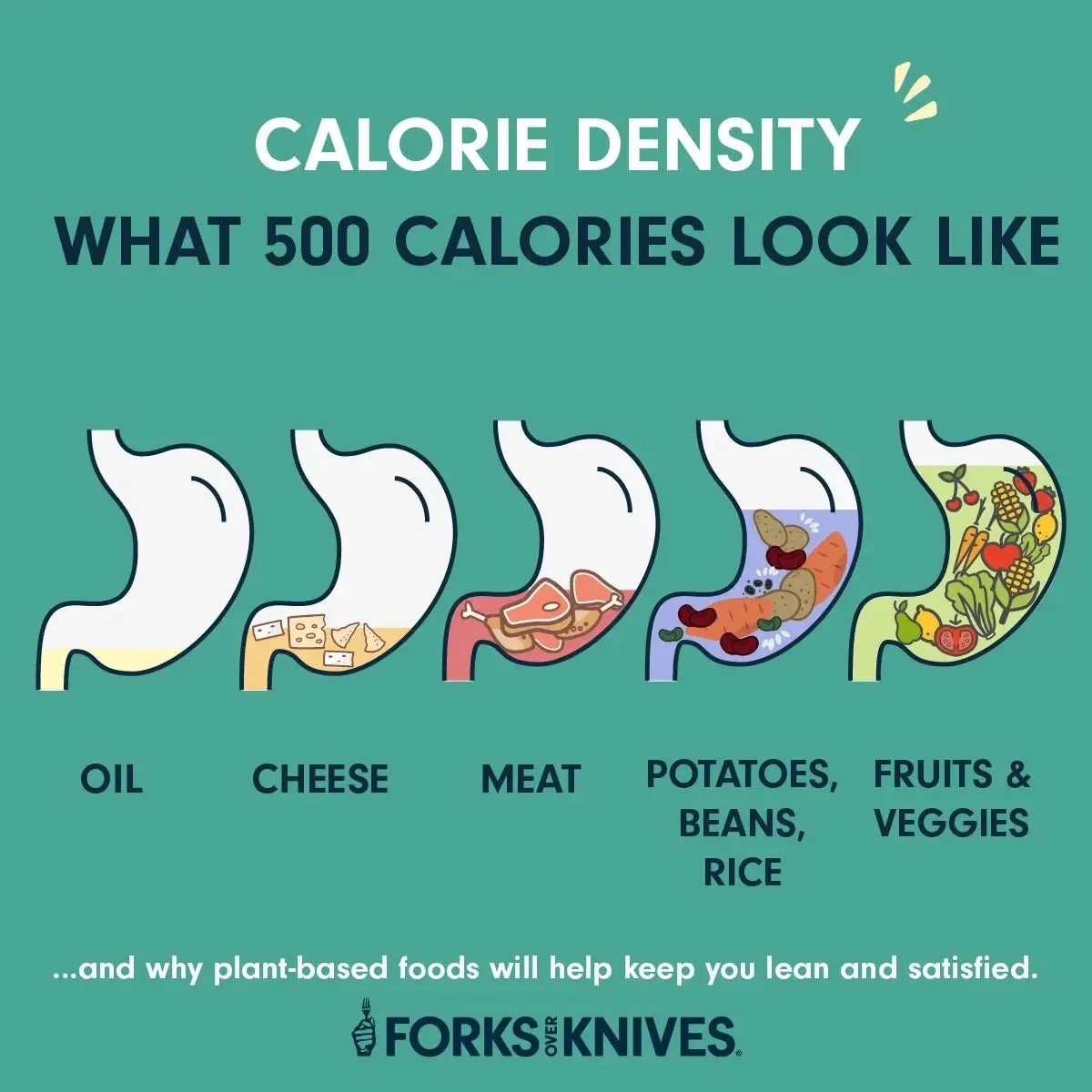
This image compares how low- and high-calorie-dense foods fill the stomach with the same number of calories.
Calorie Density: Foods Ranked
Here’s a quick look at foods by calorie density—from lowest to highest:
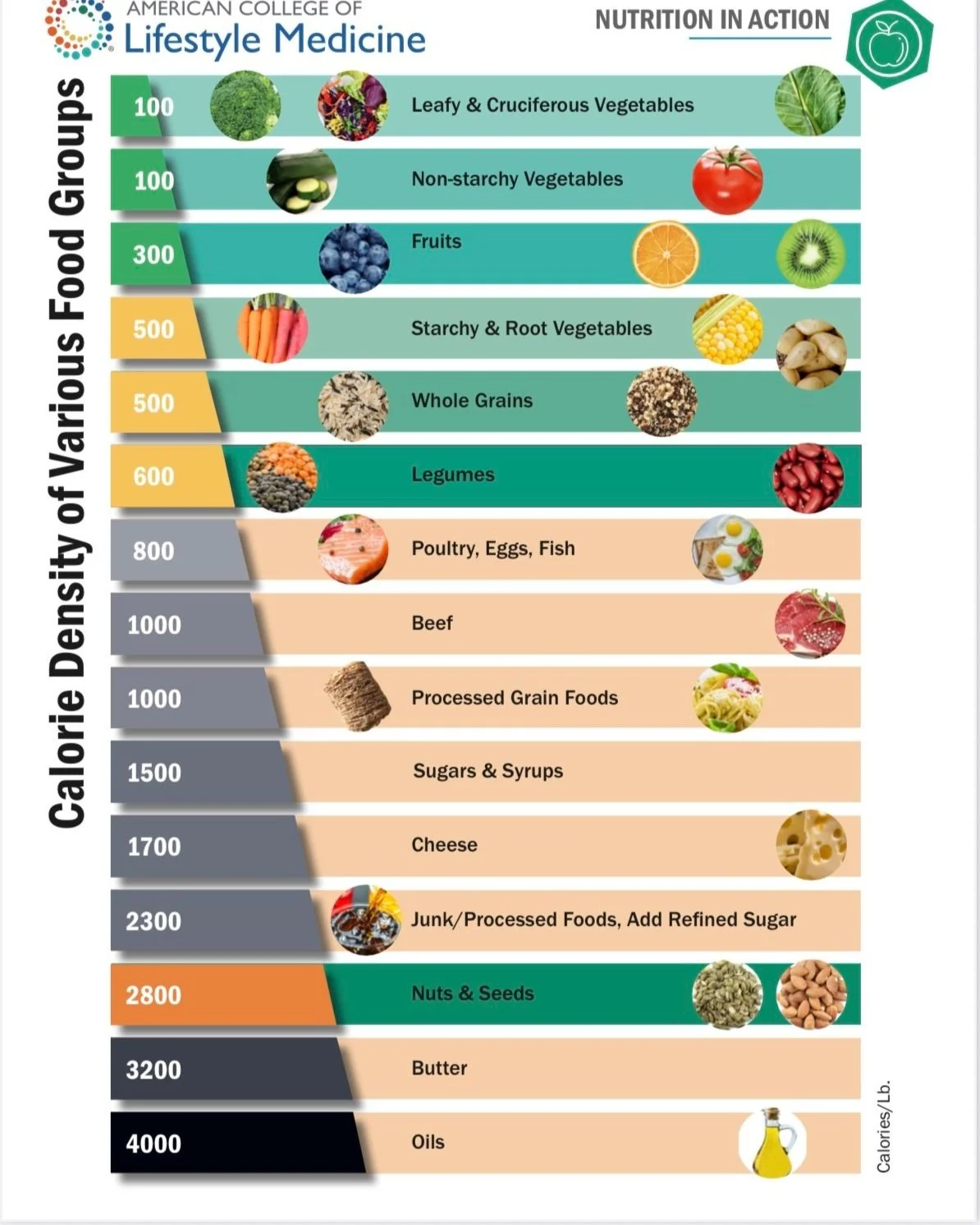
A list showing common foods ranked from lowest to highest calorie density.
Practical Tips
Add a side of veggies or fruit to every meal.
Use smaller amounts of high-calorie toppings for flavor.
Read nutrition labels to compare calorie content per serving.
Try new recipes that highlight low-calorie-dense ingredients.
Final Thoughts
Focusing on calorie density empowers you to eat satisfying meals while managing your calorie intake. It’s a flexible, enjoyable approach that supports long-term wellness and makes healthy eating feel less like a diet and more like a lifestyle.
Want more practical nutrition tips?
Subscribe to my newsletter or follow along for wellness strategies, plant-based tips, and science-backed advice!
Have questions? Schedule a free consultation or send me an email!
Dr. Heather Gosnell
Pediatrician | Plant-Based Health Coach | Advocate for Holistic Family Wellness